Our Boats

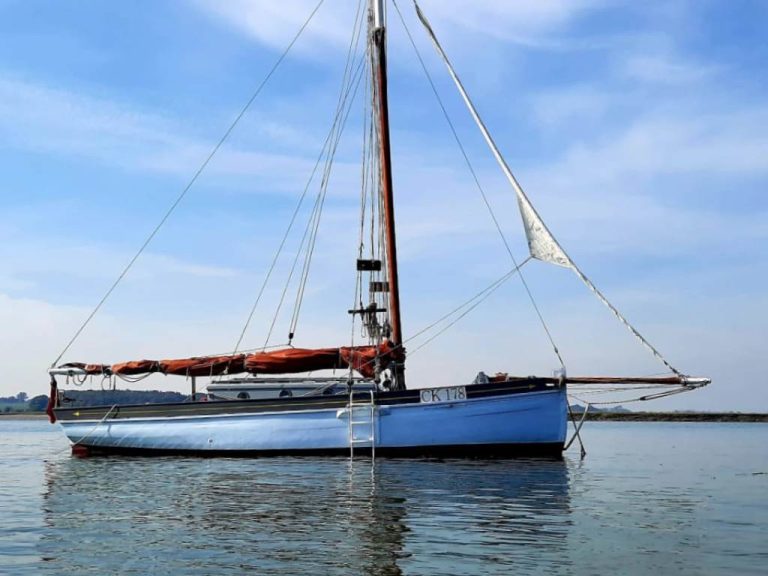
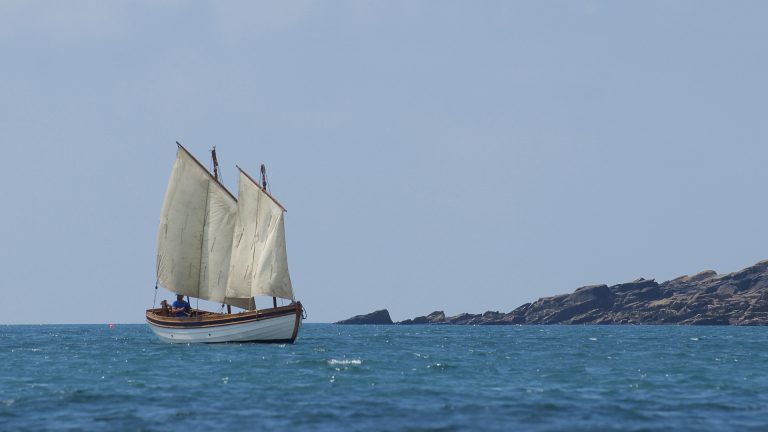
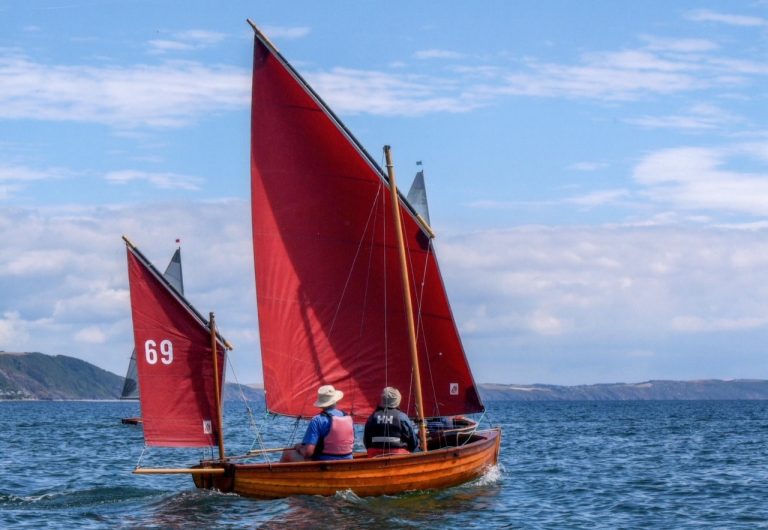
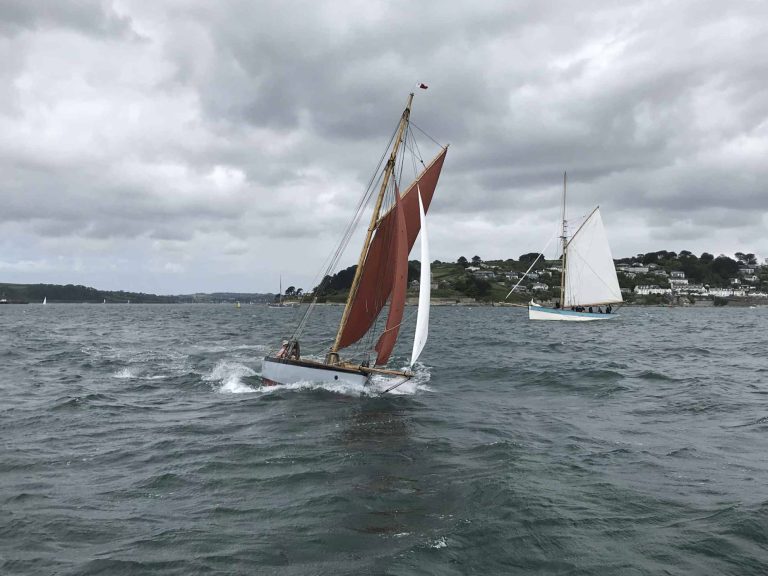
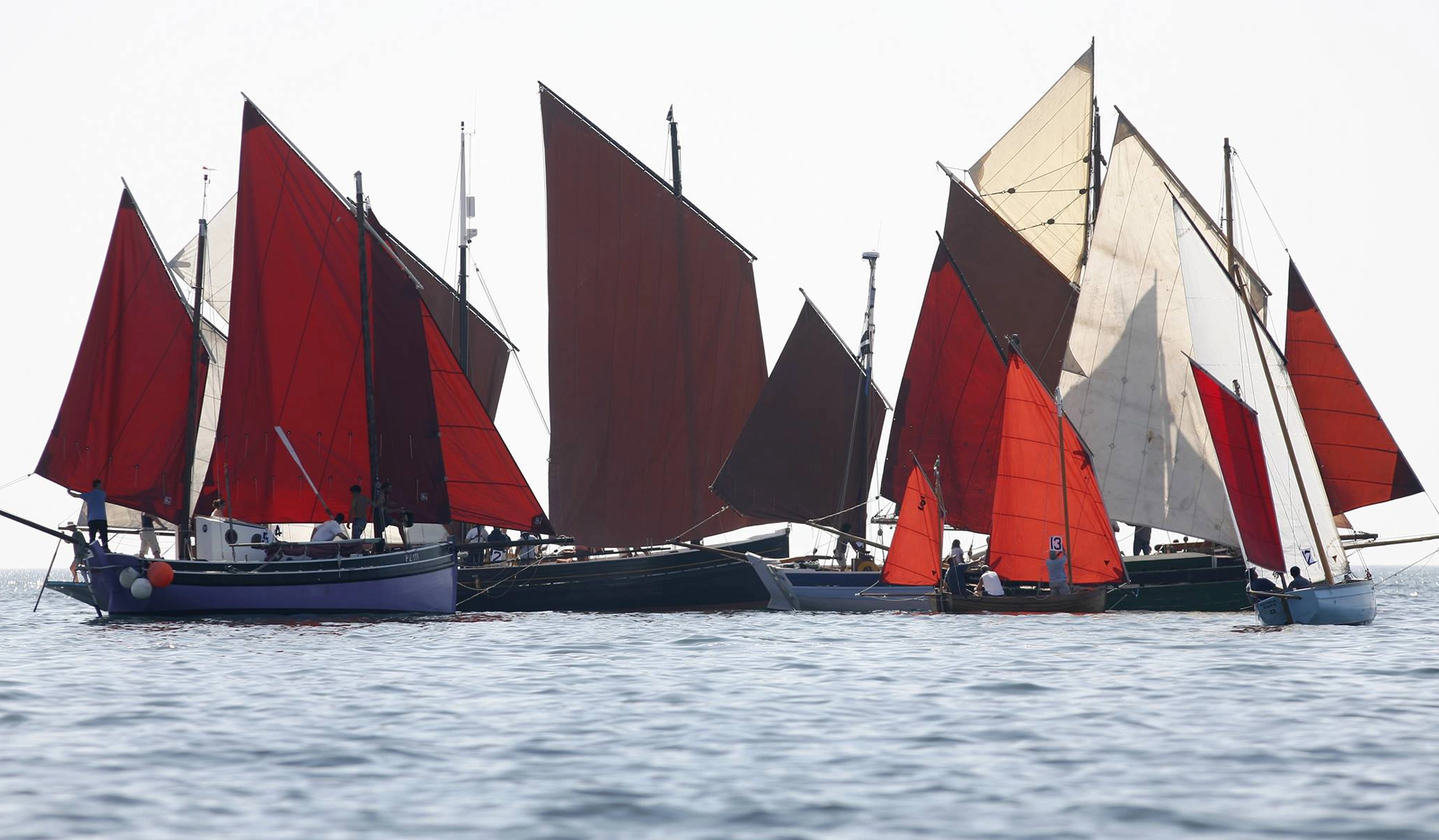
Our festival wouldn’t be the same without the spectacular boats who visit. We invite scores of historic and classic vessels to fill the harbour, re-creating the sights, smells and flavour of what was once an important, vibrant fishing port. Traditional wooden vessels, (from Brittany to Falmouth) are rigged with spars and tan sails and line the harbour wall. They then set out for an impressive parade of sail over the three days, a sight that stirs the heart of even the most hardened land lubber.

Boat Owners – we encourage you to please send us your details via the ‘Book your boat’ link on the homepage. We will do our very best to include your boat details on the website or in the festival catalogue.

Please note: the finer details of many of these vessels can be found through their skippers at the festival. As ever, the number of vessels attending is governed by the weather and we apologise in advance for any descriptive mistakes.

THIS YEAR’S BOATS – The boats listed under ‘this year’s boats’ are those that attended the 2024 festival.

This year's boats

Alando

Alando is a 28ft East Coast Oyster Smack, built Brighlingsea in 1923 by Aldous. Sailed out of Falmouth in the 1970’s and recently returned. Owned by Vanessa Cartright and Jago Hurley.

Barnabas

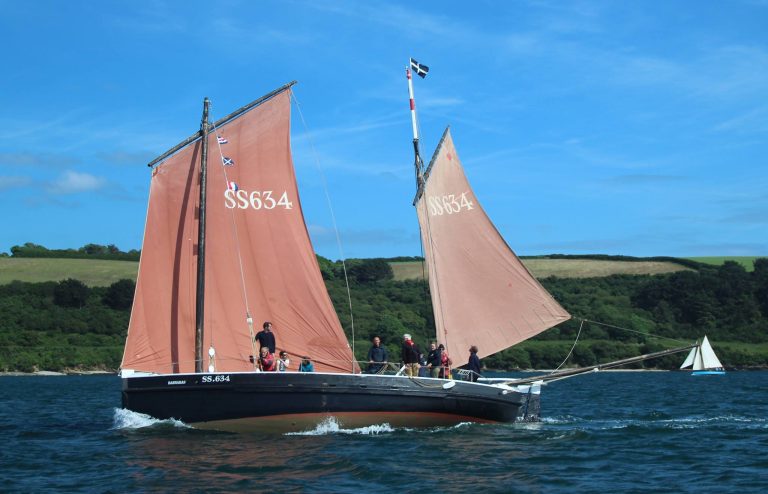
Barnabas is an 1881 40ft St Ives Mackerel Driver. She is the only survivor from the thousand strong fleet of lug rigged seine and drift net fishing boats, registered at Cornish ports at the turn of the 19th century. She underwent considerable renovation in 2005 and is now sailed as one of four traditional boats within the Cornish Maritime Trust. In 2015, she successfully circumnavigated the UK and recently sailed in Scotland and Ireland. On Loch Broom, a community of CMT volunteers cut down some Douglas fir trees the previous year for new masts! She also attends local festivals, as well as several in Brittany. There is an active community that sail and maintain her, generally based from Newlyn. Membership is from £30 for u30’s and sails are very affordable. In 2025, Barnabas was awarded the National Historic Ships (UK) Operational Flagship Vessel of the Year. And the same year, she won the Classic Boat Magazine’s Centenarian of the Year award. This was voted for worldwide! www.cornishmaritimetrust.org

See website

Blue Jacket

Built as a working fishing and shrimping boat in 1894 by Arthur Payne in his own yard, Summers & Payne, Blue Jacket (originally ‘Helen’) is a 21ft Itchen Ferry. These capable boats were not generally used as ferries as the name suggests, but took their name from the village Itchen Ferry on the Southampton Water. Here, the fleet had moorings and many were built. No early history is known as the yard and records were obliterated by wartime bombing. Blue Jacket seems to have been designed with an eye to the fierce summer racing of the era, as she has more rake and draught to her straight keel than average. This helps her stand up to weather better when carrying a boomed mainsail. The older typical rig was boomless – rather like the East Coast Bawleys. But for racing, they were kitted out with large boomed sails, which no doubt contributed much to their reputation for being heavy on the helm. By 1920, Blue Jacket had acquired a low cabin top and was registered as a yacht. In the 1930s she was bought by the great designer Uffa Fox, who was sufficiently impressed to dedicate a chapter to her in his 1938 book “Thoughts on Yachts and Yachting”. In 1983 she was rescued from a pitiful state with no bowsprit, bermudan mainsail and a larger cabin – being converted back to gaff rig with yet another cabin and with an inboard engine. After buying her in 2004, she was returned to as near original semi-open configuration as was possible to determine. Since then, Blue Jacket has proved a fine family boat and, as Uffa Fox concludes, “a thing of beauty and a joy for ever”. Owned by David Ellis and based from Falmouth.

Bounty’s End

Bounty’s End – It would go down in history as the Mutiny on the Bounty. In short, Captain Bligh and a handful of loyal men were forced into a tiny open boat and left to die. Instead, they managed to navigate 4000 mies to safety, through some of the world’s most remote and unforgiving seas. This remains one of the greatest survival feats in British history. Setting out to recreate the passage, a crew of nine men made the journey in a replica open 23ft wooden boat, built in Richmond, London by Mark Edwards MBE. Using traditional navigation and surviving off the same meagre rations as Bligh, the men were cast adrift 35 miles to the south of Tofua, near the Kingdom of Tonga. Their mission, to survive and safely navigate across 4000 miles of open ocean to Kupang, Timor. The group were led by Anthony Middleton, SAS Who Dares Wins frontman. However, British yachtsman, Conrad Humphreys, who has circumnavigated the world three times, was the Sailing Master of Bounty’s End. They all faced a never-ending struggle, where extreme hunger, fatigue, illness, conflict and stormy seas threatened to engulf their tiny boat and end their hopes of reaching Timor safely. The Bounty Project is now an exciting and inspiring collaboration between Conrad and The Island Trust, to support young and disadvantaged people with life changing voyages at sea.

See website

Brenda Jean

The 14′ 6″ clinker boat ‘Brenda Jean‘, designed and built by Justin Adkin, was launched from Beer beach in the summer of 1999. She was originally for rowing only, but the following winter Beer Lugger sails were made for her and she was allowed to tag along in the Lugger races (provided she kept clear of the official racing Luggers!) After spending the next season crabbing sideways round the race courses, a dagger board and case were added, which transformed her into the swift little sailing dinghy she is today. Owned by Heather and JKustin Adkin, who maintain and keep this unique little clinker dinghy going from Beer.

Burgundy

Burgundy is a Nicholson 26ft South Coast One Design, built in 1956. She’s a sloop with a fractional rig. She won all three races in the 2014 Sea Salts and Sail under 26ft event and was awarded the Low Lee Trophy. Owned by Andy Tanner, she’s based in Newlyn.

Butterfly

Butterfly is a Beer lugger, built by Dixons of Exmouth in 1960. She was well used off Beer Beach and the Axmouth Estuary in Devon for many years. Now owned by Dougal Bird in Cornwall.

Celeste

Celeste is a 20ft true replica of the Jumbo Class of open double-ended luggers, that fished from St Ives during the 1880’s. With all the characteristics of the dipping lug rig in an easily manageable form, the Jumbo is an ideal boat on which to learn. Two replicas were researched and built by Jonny Nance of the Jumbo Association. www.stivesjumbo.com

See website

Clio Marie

Clio Marie is a 46ft (LOD) Grimsby Smack built around 1895. Originally called Bertha, she had an extensive rebuild by Sid Fisher in Poole over a 10 year period and renamed Bertha Fisher when relaunched in 1985. Sid Fishers family had been boat builders for many generations and Sid, assisted by his father felled the oak trees in the autumn of 1975 and planked and seasoned them for five years before starting the rebuild. She was sailed as a yawl for many years, but is now reverted to a gaff cutter rig. She is massively built using 1 and ¾ inch oak planks on 4’’x4’’ oak frames, doubled below the waterline and mostly copper fastened. She is based in Falmouth and owned by Shane Carr.

Dawn

Dawn was built by Dauntless Boats on Canvey Island, (Essex) initially as a rowing dinghy but converted into a fine sailing craft by Allan Staley of Faversham, during the 1960s. She’s been trailered to the Brest and Douarnenez festivals and many in Cornwall. Dawn is 12ft long with an enormous 18in bowspit! Gaff rigged with Wilkinson sails from new. In 2022 she had a big refit by James Baker in Falmouth, (below and above decks!) and according to Spider, sails like a witch! Owned by Nicholas and Leila Hardy.

Demeter

Demeter was originally called Eileen. She’s a 42′ Looe lugger, built by Mitchel’s, launched in 1920 and was one of the last five boats still working out of Looe in the late 1960s. She’s owned by Dougal Bird and kept in Gillan Creek.

Dreckly

Dreckly was built in 1998 by Martin Heard and is a 15ft GRP Cornish sailing punt with a standing lug rig. One size down from a Picarooner, she’s pretty seaworthy and when the wind’s in the right direction, she has a surprising turn of speed! Owned by Matt Brunyee in Penzance.

Ellen

Ellen is an engineless Gorran Haven Crabber, one of four historic vessels that form part of the Cornish Maritime Trust. She was built in 1882 by Dick Pill for the Willmott Family, is 17 ft, a beam of 6ft and a 2’ 6” draft. Her lines and spritsail rig are specific to Gorran Haven. She’s reputed to be the fastest original Gorran Haven Crabber ever built, though there’s two new ones based in the Carrack Roads. She’s certainly the oldest! By 1900, she was being fished by the Billings brothers, Dick and Andrew, who moved her to Flushing as there were too many Crabbers in Gorran Haven! She’s now permanently based in Mousehole, trailered to certain events and there’s a plan for adventures further afield. There is an active community that sail and maintain her, generally based from Mousehole. Membership and sails are very affordable.

See website

Gladys

Gladys was built in 1901 in Peel, Isle of Man. Referred to as a Nobby, she originally had a standing lug rig when fishing for herring. She’s 40ft long, with a draft of 5’ 5’’ and a beam of 11’ 5’’and has been converted to a dipping lugger. Based in Penryn, she’s fast and graceful and owned by Charlotte Whyte. Also, check out www.bluerivertable.co.uk for fine dining aboard Tethra, a converted 36ft mobile Cornish fishing boat.

Gleaner

Gleaner (LT64) is a graceful 60ft twin-masted vessel and the only dipping, lug rigged Lowestoft Drift Netter sailing today. Originally built in 1878 by Richard Kitto’s yard in Porthlevan, Mounts Bay, she was abandoned on the hard in Germany in the 1970’s. Spike Davies and an incredible community of skilled friends brought her back to life and after nearly 50 years, she made the 2018 SSS her first proper passage.

Gwengolo

Gwengolo isn’t a traditional classic, however, this 18ft vessel class was intended for ‘low cost wood’ 1960/70s amateur French construction (a JJ Herbulot and Philippe Harlé design). They’re part of French sailing history. Yves Breton sails out of Plouguerneau and is inspired to cross the channel for SSS. And for this we say join us – fair winds.

Guide Me

Guide Me was built in 1911 by Peter Ferris of Looe and started life as a pilchard driver and long liner in Cornish waters. She was sold in 1966, re-named Guidez Moi (FY233) and then ended up in the Channel Islands, later Portsmouth. Jono and Jude Brickhill purchased her in 1977. During the full restoration, they found her christened name Guide Me, carved into the original bulwark. She is based in Gweek, Cornwall. This twin-masted dipping lugger is in a league of her own and powered entirely by wind (or oars!). She’s 40ft in length, though overall 72ft, with a 12’10” beam and 5’10” draft. Being a very fast sailing vessel, carrying ample sail, she’s generally out front in most of the classic races. In 1988, the Brickhills, including four children sailed via Douarnenez Festival to Spain, Portugal, Tenerife, La Palma and then on to Brazil. They returned via Cape Town and then later back to America.

Guiding Star

Guiding Star is a Looe lugger built in 1907 by James Angear for Thomas Soady to fish for mackerel, pilchards and herring off the coast of Cornwall. She was one of the last Looe boats to be designed as a pure sailing boat. She has a finer hull and sails faster than boats built only three or four years later, after petrol engines were introduced. Guiding Star fished for nearly thirty years but was sold during the depression of the 1930’s and converted into a yacht in 1937 at Uphams yard in Brixham. Her first owner was a surgeon from Torquay. From 1960 to 1989, Guiding Star was owned by Brigadier John (Jack) Glennie, who sailed her all around Europe including the Baltic Sea. She was then substantially rebuilt in the early 1990’s by Barry Jobson and Jacquie Gillespie, who sailed her to the Caribbean and back and took part in many classic regattas. Her current owners are Paul and Sue Eedle.

Hannah

Hannah is a 16ft Beer Lugger built by Mears in Axmouth, in 2016. Owned by Giles Frampton and Hannah Lovegrove.

Happy Return

Happy Return is an original 40ft Cornish Lugger built at Kitto’s Yard, Porthleven in 1904. She was the oldest registered fishing boat when the owner decided to decommission her in 1998. She has a beam of 13’ 6’’ and a draught of 7’. She was restored by ‘The Mounts Bay Lugger Association’ and regulary sails out of Penzance. www.happyreturn.org/

See website

Harrier

Harrier is a 26ft Fairey Marine yacht design – build using a hot moulding technique previously developed for wooden aircraft in the 1940’s. She is a seaworthy practical yacht, with room for all the family and able to explore shallow creeks and rivers – hense, George Taylor keeps her near the top of the Taymar at Cothele.

Holly Mae

Holly Mae is a 35ft gaff cutter, traditionally built by Joff Rorke of larch planking on oak frames. The design is inspired by the West Country work boats of around 100 years ago, though there are influences of Falmouth Working Boats, Falmouth Quay Punts and Pilot Cutters. She was built in Gulval and has crossed the Atlantic, spending a winter in the West Indies and several seasons exploring the Baltic.

Ibis (FY519)

Ibis (FY519) is a 41-foot Percy Mitchell lugger, built in 1930. She has a rich history of fishing in the West Country, holding two fishing records and operating out of various Cornish ports. In the 1980s, she was one of the last working luggers in Looe, and in 1990, she was designated a ‘historic fishing vessel’ by the MCA. Restored between 2022 and 2025 with support from the Heritage Lottery Fund, Ibis is now owned by Lynher CIC, operating as Sail Trade South West. Owners Dominic and Barbara Bridgman use her to promote sustainable food culture and sail cargo, adhering to their “every small action can make a big impact” mantra. MCA licensed for commercial transport and cargo, she’s based in Plymouth, she transports fine food from France, showcasing environmental sustainability. She also runs community education projects along the Devon and Cornwall coast, engaging diverse audiences with Cornish maritime heritage. http://www.sailtradesouthwest.org.uk

Ibis

Ibis is an East Coast Oyster Smack of timber carvel construction with pitch pine hull and an inboard diesel engine by Kubota. She was originally built in 1888 for The Whitstable Oyster Company and worked the oyster grounds for about 30 years. When bought by her previous owners in the 1970’s Ibis needed extensive work and it took seven years before she could go for her first sail. Since then, she has been kept in sailing condition and in 2003 completed an Atlantic crossing where she won the Spirit of the Regatta Cup in Antigua. Today, she lives in Penryn and is used to ship Petrel Rum to events around Cornwall, Isles of Scilly and Brittany. She is owned by Elle Demaus.

Jobic

Jobic is a 15ft Iain Oughtred (Penny Fee designed) clinker boat, built in 2019. She has a fine wine glass transom, a variety of rigs (inc lugger) and 1 or 2 masts. In recent times, she’s been trailor sailed in Saint Nazaire, San Sebastian, Arcachon, Golfe du Morbihan, Rade de Brest, Saint Malo, Rance River, Rendez-vous de l’Erdre, Geneva Lake, Venice Laguna, Edinburgh – and now Mousehole! Owned by Frédéric Andre, based near Saint Malo.

Juno

Juno is a 23ft 1980’s fiberglass cutter built by Terry & Martin Heard of Mylor. She is owned by Jim Wilkinson and sailed out of Penzance. With a gaff rig, she’s very capable, as well as a beautiful traditional looking vessel.

Kairos

Kairos is a Selway Fisher Highlander 12 with Sprit rig. She’s 13ft by 5ft, draws about 8 inches and is only 10 years old. Home built from marine ply, she looks older as painted black and has her original Norfolk Broads number on the bow. Owned by Vernon Holt.

Kittiwake

Kittiwake is a 1967 Maurice Griffiths Thames Bawley Bermudian Sloop. She is bronze fastened, with carvel mahogany planked on Iroko centreline structure, over rock Elm frames. She is owned by Amber Trasahar and her home berth is Newlyn. Prior to this, she was at Bucklers Hard, Beaulieu and according to local Portsmouth sailors, in hushed tones of awe, she apparently crossed the Atlantic. With much affection she is lovingly maintained here in Mounts Bay.

Lily

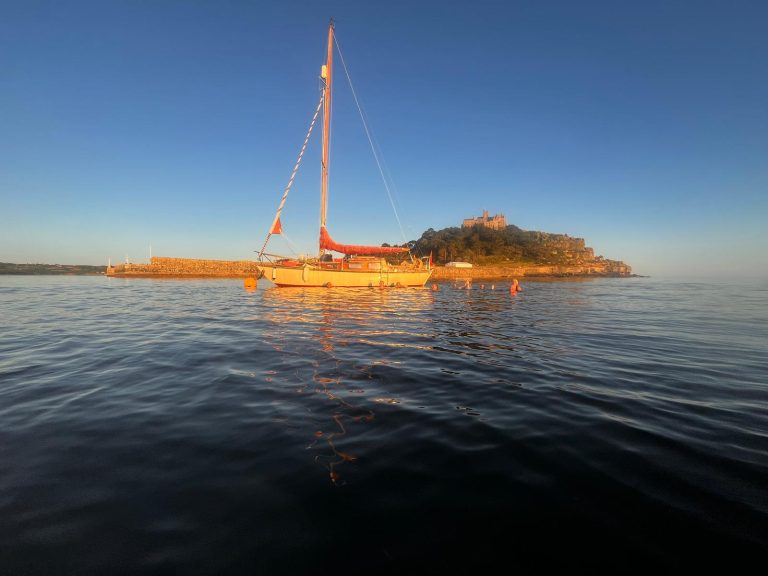
Lily is a traditionally looking Memory 19, which is gaff cutter rigged. Built around 1977 in GRP, she’s a replica of a 1925 Brightlingsea fishing boat. Owned by Paul Elliot, she’s sailed out of St Michael’s Mount.

Lucy

Lucy is a 24ft Cornish GRP Yawl, designed by Roger Dongray and built by Cornish Crabbers in Rock, Cornwall in 1989. Owned by Russell Eden.

Maggie Helen

Maggie Helen is a rare Zulu, with official number 161170, registered at Lerwick, Scotland. She was designed by John Shewan and built by Hay & Co Ltd. in 1904 at Hays Dock, Lerwick. Her hull was carvel built with larch planking, oak frames and a redwood deck fastened with iron nails. She has a pointed bow, a plumb straight stem and a Zulu stern. As a fishing vessel, she was converted to motor propulsion. In 1952 she was re-rigged and renamed LOKI as a yacht with Bermudan schooner rig, then further converted in 1960 to a motor cruiser. She cruised around Shetland and to Scandinavia every summer from 1953 to 1997. A restoration project was partly completed in 2007-‘09, with planking complete but requiring caulking – the vessel wasd abandoned as a hull only, with no deck or superstructure. In the summer of 2022, Maggie Helen was rebuilt at the Shetland Museum & Archives in Lerwick, in the very shed where she was originally built in 1904. The rebuild used mostly available and recycled materials and up to 15 volunteers worked for three months to bring her back to life. The project was led by Benoit Cayla (Rose of Argyll and Swallow), who comments that he became interested in the historic vessel because of her Zulu style hull. She has a raked stern for protecting the rudder, but a straight-stemmed lugger style bow. This provides more deck space in crowded ports and was a popular choice for herring boats in the late 1800s. At one point there were hundreds, but the style is quite rare now. She’s very much a head turner in any harbour as she is operated traditionally in every respect. Once relaunched, she’s ploughed the seas in Scotland, Denmark, Norway, Britany and over the channel sevaral times – engineless.

Maia

Maia is a 12ft St Ives sailing punt. Built by Jonny Nance in 2015, she’s traditionally constructed with oak keel and douglas fir clinker planking. She has no centre board or dagger board and relies on her hull shape and shallow full length keel to sail to windward. She has a standing lug rig on an unstayed mast. Sailing out of St Ives, she is owned by Scott and Tom Bowring .

See website

Maid of Shannon

Maid of Shannon is a 33ft 11 ton Hillyard built in 1967. She’s got a long keel, ketch rigged and belongs to Dave Ashman. Sails out of Exmouth.

Mallard

Mallard is an 18ft Clovelly Picarooner built in 1984 by Terry & Martin Heard of Mylor. She is number six built. Lines were taken from the Picarooners used for herring fishing in and around Clovelly. These smaller vessels were used in order to land the catch earlier than bigger fishing boats, hoping to secure the best prices! There is a rumour that the original boats were based as ships boats, found after foundered Spanish galleons from the Amarda. But there is only anecdotal evidence for this. The name comes from ‘sea robber’ or ‘pirate robber’, a name given no doubt by the owners of the larger craft that had to wait for the higher tide before they could land their catch! At the height of the herring fishing, there were over fifty Picarooners fishing from Clovelly. The rig is much modified by Malcolm Gorram, the present owner. There’s a longer bowsprit, more rudder area and 20% more sail. There’s even a less intrusive outboard, set within an inboard well.

Mispah

Mispah was built by Gary Mitchell of Percy Mitchell & Sons (of Porthleven) in 1982. She is 20ft and constructed of English oak and elm with Larch planking. She has a standing lug mainsail, mizzen and jib – referred to as a Mevagissey Tosher. Owned by Jamie Pallant and on permanent loan to the Mounts Bay Lugger Association charity who have completed a full winter 2025/26 refit. Currently moored in Penzance, she is sailed weekly in Mount’s Bay by MBLA members. www.happyreturn.org

See website

Our Daddy FY9

Our Daddy is a 45ft Lugger (75′ with bowsprit and bumpkin) and carries 2,500 sq feet of sail. Built for (£435) in Looe in 1921 by Dick Pearce for the J E Pengelly family, she was skippered by their son Alfred John. She fished for some 65 years in the pilchard, mackerel and later shark fishing industries. She was the last sailing Lugger to work out of Looe and was then owned by Mike Darlington and Stuart Murray. Mike, who fished on the boat with the legendary Alfred John Pengelly said: `A J told me: “One day, she will be yours.” But he forget to say it would take 21 years…’ Our Daddy has been re-built as a stunning classic with a Dandy Rig and since 2014, owned by Steve Styles and Tim Sunderland.

See website

Outdoor Girl

Outdoor Girl is a 17ft replica of an 1880’s Gorran Haven Crabber and built in 2008 by Peter Williams of Bodinnick Boatyard, Fowey. She’s traditionally sprit rigged with tan sails – loose footed main and mizzen on a bumkin. Now operated by Debbie Purser’s Cornish Sail Row Explore Club, helping members re discover the art of inshore exploring. https://sailrowexplore.club

Pegasus

Pegasus is a 56ft Ed Burnett designed Bristol Pilot Cutter, built by Bristol Classic Boat Yard in 2008. Historically owned by Island Trust in Plymouth, her new owners, Passeurs d’Iroise Association are doing non-profit sail training and commercial outings from Camaret, Brittany. http://passeursdiroise.fr

Peter’s Punt

Peter’s Punt is a replica 2014 St Ives sailing punt, operated by the St Ives Jumbo Association.

Pickle

Pickle is a GRP Heard 23, built 1984 and is a gaff rigged cutter. Owned by Kyle Abingdon & Neythan Hayes, she sails out of Mylor.

Picotee

Picotee II is a 28ft Maurice Griffiths designed cutter, built by Seacraft, Leigh on Sea in 1949. Surveyed in 1985 as a Lone Gull Bermudian Centreboard Sloop – she has carvel Honduras mahogany planks on sawn oak frames, a 1 ton external keel and 0.5 ton of nternal ballast. She spent her early years in Essex before moving to Inverness in ’87, Dumbarton in ’94, Dawlish in ’97 and Ramsgate in 2008. She was then converted to a gaff cutter in 2011, with sitka spruce mast, Douglas fir boom, with Douglas fir gaff and bowsprit. Her final move to Cornwall was in ’21. Owned by Tim Price and based on the Helford.

Pixie

Pixie is a 17ft clinker built Beer Lugger, with dipping lug and mizzen. She was built in 1950 and owned by Jason Godard.

Polly

Polly is a pretty 12 ft McNulty Longstone design. She is gaff rigged and clinker built of Mahogany and Oak on the Tyne in 1987. Owned by Kevin Burnham and trailered from Devon.

Prudence

Prudence is a Percy Dalton designed 28 ft, hard chinned steel gaff cutter. She is loosely designed around a Falmouth Working Boat, currently moored in Penryn and owned by Harrison Wood. She has a long keel and was built by a fishing boatyard as a one-off in 1980, along with her 25 ft twin that her owners have never tracked down.

Reliance

Reliance (FY59) is a 38ft Mevagissey dipping lugger, built in 1903 by Dick Peal of Gorran Haven. She was built for the Hunkin family of Mevagissey and fished from here until 1948 when she moved to the Penzance registry as PZ290. She has a beam of 11′ 6″ and draft of 5′ 6″.She left the fishery in 1966 and like many luggers, she fell into disrepair but was discovered again in the late 1990`s in the Heards Yard near Falmouth. Rescued in 1998 by Deana Russell, she’s been fully restored between 2014 to 2018 by the current owner, Since then she’s cruised to Brittany and the Outer Hebrides. She is owned by Graham Butler and her home port is Cawsand, Cornwall.

Roanna

At 36ft, Roanna is a modern 3 masted lugger, designed by Nigel Irens. With a modern take on the evolution of Westcountry fishing boats over the centuries, she was built in Staverton on the river Dart in 1999. She portrays a charming blend of old sea-worthy values with modern lightweight materials, with strip planked cedar hull and carbon fibre free standing rig. She will give any modern boat a run for their money, while visually retaining the charm of times long gone. Based on the River Yealm, she’s owned by Chris George.

Seren y Môr

Seren y Môr is a Francois Vivier designed balanced lug sail Minahouet. Francois’ many designs are inspired by the traditional small inshore Breton fishing boats, Seren being no exception. She was home built in epoxy ply from a Jordan Boats kit between October 2021 and April 2023, finished just in time to take part in the Semaine de Golfe, Morbihan, Brittany that May. She again took part in the Semaine in 2025 as well as the Rendezvous de L’Erdre in 2024 and 2025 and La Misaine Bleue in 2025, all being for traditional boats. Owned by Jenny and Hywel Batten and based in Cardiff.

Silver Stream

Silver Stream was built in 2004 by the Falmouth Marine School, however, she’s a true replica of an 1892 Sennen Cove Crabber. The original was registered as PZ468 for the Nicholas family in Sennen. From here, she fished mainly for crabs and lobsters but reputedly sailed as far as the Scilly’s in good weather. It’s believed she was fished commercially until the 1930’s, after which no records exist. She’s now owned by Glenn and Clare Morris and sails as part of the Cornish Maritime Trust out of Newlyn. She is built in the traditional fashion of larch planking on sawn and steamed oak frames, copper and bronze fastened. Spars are of Douglas Fir and the rig follows the original dipping lug design. She is solid, stable and a very capable 22ft 4’’ open dipping lugger. With a 14hp Beta marine engine, she can also be rowed and sculled. A part of Silver Stream’s role within the CMT, is to help train younger members (and keen older members!) to sail a dipping lugger. The trust hopes this eventually gives crew the confidence and experience to skipper a larger more historical vessel, such as Barnabas. The aim of the CMT is to help preserve a fraction of Cornwall’s maritime heritage, by maintaining and sailing four working vessels from the days of sail: Barnabas 40ft 1881 St Ives Dipping Lugger, Soft Wing 24ft 1900 Truro River Oyster Dredger, Ellen 17ft 1882 Gorran Haven Crabber and Silver Stream. We have a lot of fun sailing, but also work closely with our community of members on the maritime history and skills needed to maintain traditional vessels. Our vessels sail from Falmouth, Newlyn and Mousehole. The yearly membership is from £30 each to £40 a family. www.cornishmaritimetrust.org

Softwing

Softwing is a 1900 24ft 3in Truro River Oyster Dredger, registration number TO4. Very full in the bilge with a rounded forefoot and is considered by many to have the ultimate hull form for her trade. She is one of only a few Falmouth “working boats” to have retained something close to their original rig, as those that race in the summer months are now specifically rigged for racing. When Softwing was built these boats would have been dredging in the winter then racing in the summer when the fishery closed. She is an open boat with a foredeck to the mast, narrow side decks outboard of the coaming and a narrow deck across the transom. She is a gaff cutter with a bowsprit and was designed to be worked by one man. Based in Falmouth and sailed by volunteers of the Cornish Maritime Trust charity, whose vessels also sail from Newlyn and Mousehole. The yearly membership is from £30 each for u30’s to £40 a family. She’s skippered by Ian Woodford. www.cornishmaritimetrust.org

Spirit of Mystery

Spirit of Mystery is a replica 37ft Mount’s Bay lugger. In 1854, a discussion in the Star Inn in Newlyn led seven fishermen to set sail in the hope of finding their fortunes. 116 days later, their Cornish fishing lugger (that had never been out of sight of land), arrived in Melbourne, 12,000 miles away. That’s approximately 103 miles a day! Built by Chris Rees in 2008, Mystery was then skippered by Pete Goss and replicated the original voyage. Now owned by Dan Johnson and Charlotte Watters and based in Loch Broom, Ullapool.

SSS Sculling Punts

Scully Punts: Sea Salts and Sail were kindly donated two 14ft fiberglass oyster punts. With the help of a Mousehole Harbour grant, these were totally rebuilt by Dan Hills and Rob McDowell and converted into ‘scully punts’. With their red and green gunnels, Port and Starboard’s primarily objective’s are educational – to encourage children to come out and experience what it’s like on a rowing boat, to gain a healthy respect of the water and ultimately, to learn to scull these vessels. It’s also free. Oh, someone also said, if we teach the kids to scull, we may beat the Bretons in a race one day! To help cover maintenance costs, please visit our stall and donate to this worthy project. Also, we’re very happy for the kids to have a supervised try out.

Swallow

Swallow (ex Genera) is a former Dutch hajcutter built in 1926 in Denmark to commercially fish. Discovered as a rotting househoat in Penryn, a Breton team, aided by a jury motor and basic rig, miraculously crossed the channel to finish in a muddy creek near Lannilis, Aber Wrach’t. From 2011-21, she was rebuilt by traditional shipwrights and sailors, led by Benoît Cayla, Élise Neau and Bleuenn Chorlay. The project took around 10 years (an incredible story), and represents a true community success story. From exploring the Scottish Isles, Denmark, Norway and tuna fishing in the Bay of Biscay, she also attends many traditional festivals. Swallow is probably more famous in Cornish waters than in Britany. Elise, her owner/skipper, keeps her engineless which is a feat in itself, especially accessing Mousehole’s harbour.

Sweetpea Too

Sweetpea Too was designed and built by the Falmouth Packet Company in 1965, based on a Scandinavian double-ender in an Arctic Tern style. She’s moulded in GRP, is 18ft 5 inches overall with a beam of 6ft 5 inches and a Sliding Gunter rig. A lovely day-sailor moored in Mousehole and maintained in memory of her former owner renowned artist Nigel Hallard.

Unity

Unity is a newish 40ft workboat-style gaff rigged cutter, designed by Jon Bray and built by West Country Cutters. Her hull is based on a Mevagissey Lugger. She was launched in 2016 and turned heads at her first festival, Sea Salts and Sail, followed immediately by Brest and Douarnenez. She’s as traditional as it gets: larch on sawn-oak frames, copper and bronze-fastened, including a delightful wood burning stove, with a spacious, very practical interior. She’s fast, looks stylish under full sail and through simple rigging, can be sailed by two.

See website

Wild Boy

Wild Boy is a 16ft spritsail yawl, based on the lines of the 1882 Gorran Haven crabber ‘Cuckoo’. Traditionally sprit rigged with cream sails, loose footed main and mizzen on a bumkin. Built by Debbie Purser and boatbuilding students at the Lyme Regis Boat Building Academy in 2021. Now operated under the Sail Row Explore Club, helping members re discover the art of inshore exploring. https://sailrowexplore.club

See website

Okay, thank you
This website uses cookies, to read our privacy policy please click here.